Want to be in the loop?
subscribe to
our notification
Business News
PHU QUOC CONDOTELS WARMING UP THE MARKET
On March 8, a Boeing 787 of Swiss airline TUI Nordic, packed with Northern European tourists, landed at Phu Quoc International Airport. A representative of the airline said that in the last months of 2016 they are going to have weekly flights to Phu Quoc.
Besides being a popular destination for tourists from Russia, Singapore, Malaysia, and Thailand, Phu Quoc has recently started welcoming visitors from Europe. In the past year, many foreign airlines have opened routes or increased the frequency of flights to Phu Quoc because the infrastructure serving tourism, especially accommodation, has improved remarkably.
As the island is looking forward to a boom in tourism, now is a unique time to invest in real estate here.
In fact, foreign investors from a variety of countries have already shown great interest. At the beginning of 2016, an event to introduce Sun Group’s hospitality real estates in Singapore attracted representatives from more than 200 real estate companies. Leong Boon Hoe, managing director of CBRE Singapore, said that three factors making hospitality real estate in Vietnam attractive to Singaporean investors are their competitive prices, good location, and the prestige of the developers.
In Singapore, a three-bedroom condotel is priced between $500,000 and $840,000 while a similar condotel in Vietnam only costs about 25 per cent of that.
Sun Group’s condotels are within the resort and close to the seaside. The building density is 30 per cent, while the remaining 70 is reserved for green space and 5-star amenities. The developer commits a profit of at least 9 per cent per year for nine years, and the owner of the condotel gets 135 nights in their estate or a comparable accommodation for these nine years.
Condotels are also an attractive choice compared to other investment options. If one buys a condo in the city, one remains hard-pressed to think of ways to earn a profit. In case of a condotel, the developer commits a fixed profit. Sometimes the profit one makes is even higher than the committed rate. It could reach 15 per cent per year or higher if the condotels are managed by internationally renowned hotel companies.
The condotel model is a recent addition to the Vietnamese real estate scene, though enjoying international popularity for a while now. Condotels in Singapore, Boracay in Phillipines, Bali in Indonesia, and Sydney in Australia have proved extremely profitable.
Condotels were hot in Vietnam five years ago, when investors raced to get their hands on condotels from international projects, such as Hyatt Regency and Azura in Danang. At that point, the price was $4,500 per square metre. At the end of 2015 condotels made a comeback with Sun Group’s Condotel Premier Residences Phu Quoc Emerald Bay project, and judging by the warm welcome of the market, one can say that condotels have not lost their shine.
With not only Sun Group, but also many real estate companies, such as Vingroup and LDG Group, seeing big opportunities in the condotel segment, investments in the area are poised for a surge in 2016.
Source: VIR
Related News

INFRASTRUCTURE / CONSTRUCTION / LOGISTIC / PORT
VIỆT NAM-CAMBODIA TRADE GATHERS PACE TOWARDS $20 BILLION TARGET
Trade between Việt Nam and Cambodia continues to grow, remaining a bright spot and a key pillar of bilateral cooperation as the two countries aim to raise two-way trade to US$20 billion in the coming years. After setting a record of more than $11.3 billion last year, bilateral trade reached about $8.7 billion in the first eight months of this year, up 8.3 per cent year on year.
TECHNOLOGY
AI BEGINNING TO RESHAPE RECRUITMENT CRITERIA
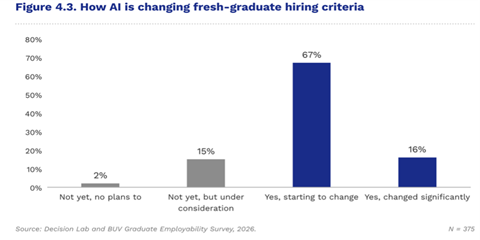
Digital literacy is the only capability area in which fresh graduates meet employers’ expectations, according to a new report. Yet, it is also the standard rising fastest, as businesses increasingly expect new hires to use AI effectively in the workplace. Some 83 per cent of employers say AI has changed, or is beginning to change, their hiring criteria, while 94 per cent report higher expectations for digital and AI capabilities than they had two to three years ago.

INFRASTRUCTURE / CONSTRUCTION / LOGISTIC / PORT
ĐÀ NẴNG GREEN-LIGHTS US$105 MILLION THAI DEVELOPMENT DEAL
The central city has approved an investment proposal by Thailand’s WHA Group to develop infrastructure for the 400ha WHA Đà Nẵng Industrial Park project on two communes of Thăng Bình and Đồng Dương, with an investment of more than VNĐ2.7 trillion (US$105 million). The city said it approved WHA Industrial Development International's status as an investor in the project, which is expected to take place between 2027 and 2034.

VIETNAM ECONOMY INVESTMENT
MOBILE PHONE EXPORTS RISE 20% TO $51.8 BILLION IN FIRST NINE MONTHS
Exports of mobile phones and components rose 20 per cent year-on-year to nearly US$51.8 billion in the first nine months of 2026, with China, the US and Republic of Korea accounting for more than half of the total. Shipments to the three markets reached a combined $26.18 billion, or 50.6 per cent of total exports of the product group during the period, according to data from the Vietnam Department of Customs under the Ministry of Finance.

VIETNAM ECONOMY INVESTMENT
FRUIT AND VEGETABLE EXPORTS POISED TO HIT $10 BILLION IN 2026
Fruit and vegetable exports are on track to reach nearly US$10 billion in 2026, after rising 19.9 per cent year on year to nearly US$7.4 billion in the first nine months, driven by strong seasonal demand and abundant tropical fruit supplies. The Ministry of Agriculture and Environment said the growth reflected stronger international demand for fresh produce and processed agricultural products.
GARMENT / TEXTILE
TEXTILE EXPORTS FACE DUAL CHALLENGES OF SUSTAINING ORDERS AND BOOSTING EFFICIENCY AMID GROWING COMPETITION
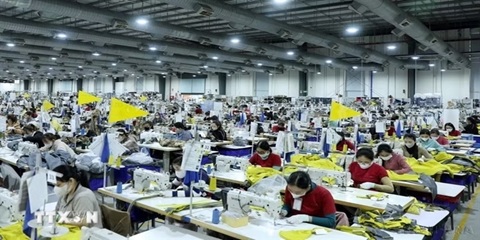
Data shows that the textile and garment sector maintained its growth momentum in the first nine months of this year. The industry's total export turnover reached an estimated US$35.721 billion in the first nine months of this year, up 3.3 per cent year-on-year. Despite posting encouraging export figures, Vietnamese textile and garment enterprises continue to navigate unpredictable market variables.
Events Sponsors






















